In 2023, the Home Office introduced a new process for dealing with children’s asylum claims. The aim was to “streamline” the process, leading to children getting decisions on their claims more quickly. In the place of submitting a SEF form and having a substantive interview the new process consists of a shorter meeting, a “Preliminary Information Meeting” (PIM). Only children of certain nationalities are eligible for the streamlined process.

We have produced these resources for children and young people who are eligible for PIMs and the adults supporting them. You can download them as PDFs or as plain text Word documents below.

We also know that many children in the asylum process are being held back by the lack of available legal aid representation. Children we work with are frustrated that they are waiting for a lawyer before their asylum claim can progress. Scroll down for a resource explaining the situation and read more about what’s happening in the North West here.

Information for young people
Preliminary Information Meetings (PIMs)
Information for young people
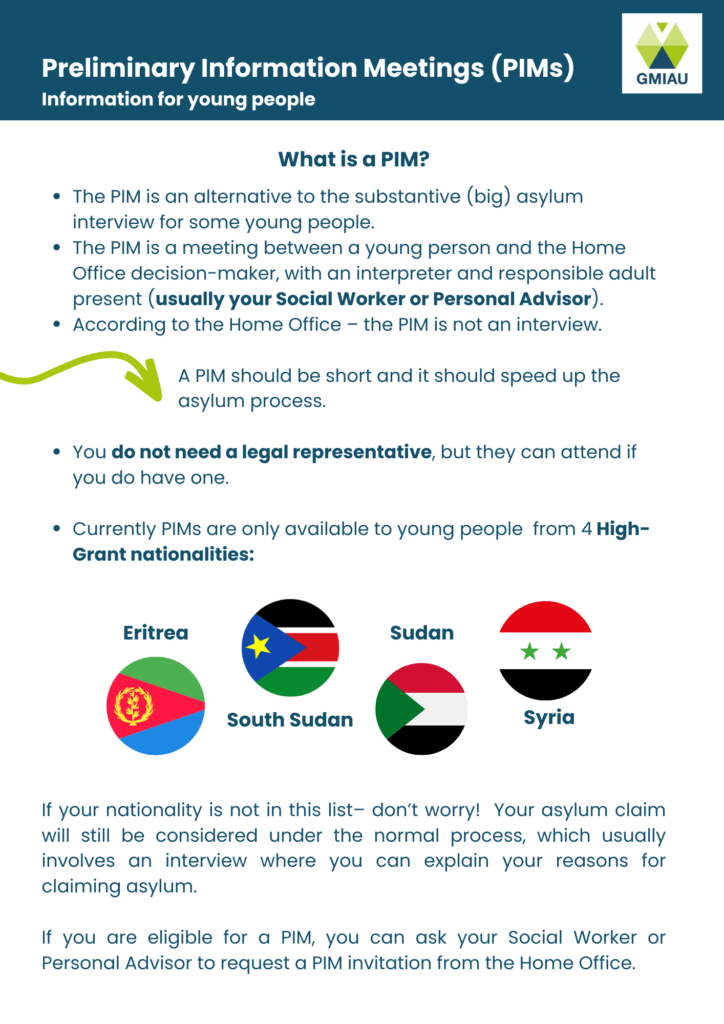
What is a PIM?
The PIM is an alternative to the substantive (big) asylum interview for young people who are eligible.
The PIM is a meeting between a young person and the Home Office decision-maker, with an interpreter and responsible adult present (usually your Social Worker or Personal Advisor).
According to the Home Office – the PIM is not an interview.
A PIM should be short and it should speed up the asylum process. 
You do not need a legal representative, but they can attend if you do have one.
Currently only available to young people from 4 High-Grant nationalities:
- Eritrea
- South Sudan
- Sudan
- Syria
If your nationality is not in this list– don’t worry! Your asylum claim will still be considered under the normal process, which usually involves an interview where you can explain your reasons for claiming asylum.
If you are eligible for a PIM, you can ask your Social Worker or Personal Advisor to request a PIM invitation from the Home Office.
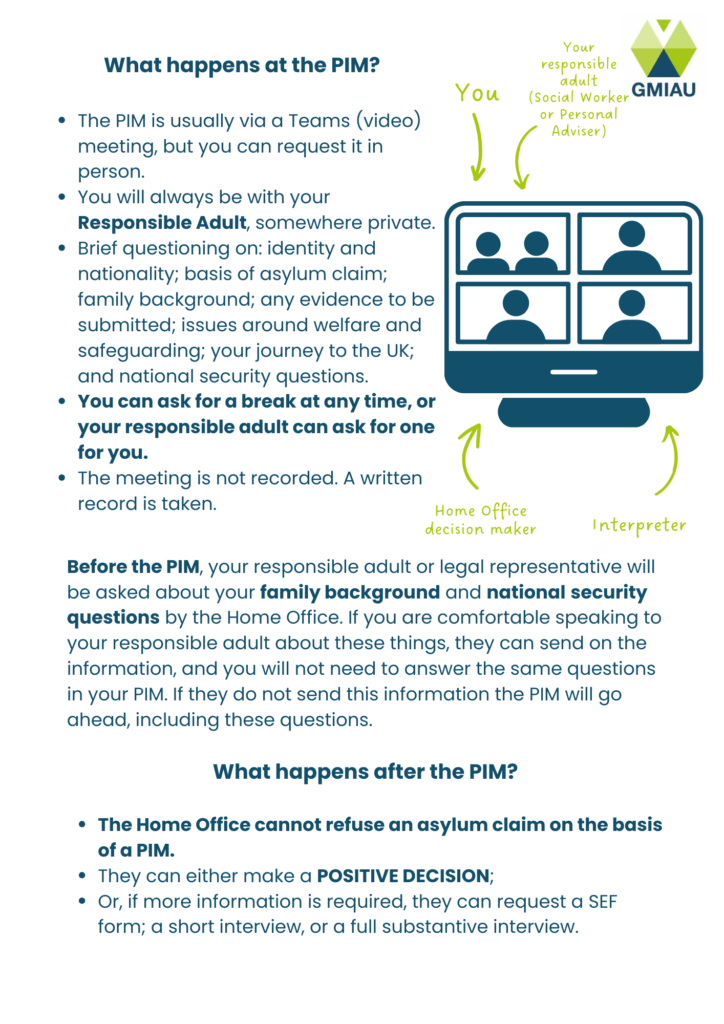
What happens at the PIM?
The PIM is usually via a Teams (video) meeting, but you can request it in person. 
You will always be with your Responsible Adult, somewhere private. 
Brief questioning on: identity and nationality; basis of asylum claim; family background; any evidence to be submitted; issues around welfare and safeguarding; your journey to the UK; and national security questions. 
You can ask for a break at any time, or your responsible adult can ask for one for you.
The meeting is not recorded. A written record is taken.
What happens after the PIM?
The Home Office cannot refuse an asylum claim on the basis of a PIM. 
They can either make a POSITIVE DECISION; 
Or, if more information is required, they can request a SEF form; a short, targeted interview or a full substantive interview.

Click to download this leaflet as a PDF
Click to download as a plain-text Word document

Information for Responsible Adults

Please see this briefing.

Waiting for a lawyer

Waiting for a decision
Waiting for a decision is normal. The Home Office can take a long time deciding cases. Everybody has to wait for their decision. Once everything in your case has been submitted, we need to give the Home Office a reasonable time to make that decision before we can chase them. 
In general, your caseworker should allow the Home Office around 3 months to make a decision or invite you for an interview. Your caseworker will be chasing the Home Office at regular intervals, and if they take too long, there are different ways to prompt the decision. Your caseworker will be doing all they can to ensure you receive your decision as soon as possible – you are in safe hands!
Ideas for whilst you are waiting:
•	Attend groups for young asylum seekers like GMIAU’s All4One group. 
•	Focus on your studies: learning English can help your understanding and integration. 
•	Hobbies such as football, cycling, sports.
•	Learn about the asylum process. 
•	Speak to friends. 
•	Speak to trusted adults.
•	If you can, it can help to write down what happened to you (in your home country and on your journey) whilst this is fresh in your memory. You can write this in your own language. 
If you want to contact GMIAU with any questions, your social worker or personal adviser should help with this. You can also email us at info@gmiau.org. 
www.gmiau.org

Click to download this leaflet as a PDF
Click to download as a plain text Word document